What is Ear Surgery and Who is a Good Candidate For It?

what-is-ear-surgery

Otoplasty, or ear surgery, is used for patients who have misshapen, out of proportion, or out of position ears in relationship to the face. This can be a problem that has been present since birth, or an issue that is a direct result from an accident or injury.

Otoplasty can return the ear to a more normal shape, and fix congenital defects that are bothersome to a growing child. Even fixing a small problem can have a significant impact on a person’s self-esteem.

Good Candidates for Plastic Surgery of the Ear

Children are solid candidates for plastic surgery once they are five years old. At five, the cartilage of the ear is stable enough to be fixed with plastic surgery. The child must also be healthy, and not suffer from any chronic health conditions that would inhibit healing. Untreated chronic ear infections will also make a child a poor candidate for surgery. A young child must also be able to understand instructions and be cooperative, as the healing process will require an adherence to instructions regarding the aftercare once the surgery has been completed.

Adults and teens are good candidates for surgery if:

  • They are healthy and do not suffer from life-threatening or chronic conditions that would impede healing.
  • They do not smoke. Smoking causes problems with the healing process, and an otoplasty candidate will not be considered if they smoke cigarettes.
  • They can identify specific goals for the surgery and have an optimistic outlook on what they can expect from the procedure.

How Ear Surgery is Completed

Depending on the level of reconstruction needed, your doctor may choose a local anesthetic, intravenous sedation, or general anesthesia. The goal will be to make you as comfortable as possible as you undergo the procedure. Once the proper sedation has been used, the surgeon will make incisions on the back of your ear to reshape the cartilage. If incisions must be made to the front of your ear, the surgeon will place the incisions within the folds of your ears to reduce visibility. Your surgeon will use sutures that don’t need to be removed in order to shape your ear correctly, allowing your ear to heal in the correct position.

Stitches are Used Externally

You will have stitches externally on your ear after the procedure, and as your ear heals you will need to take care not to ruin the stitches. How many stitches you have depends on the length of the incision, and no two ear surgeries are exactly alike.

Once your dressings are removed, you will be able to see the new shape and position of your ear immediately. While healing will take several weeks, the effect of a newly shaped or positioned ear can be seen immediately. When you get ear surgery, your physician will be careful to avoid creating any noticeable scars, and they will not be seen by a casual observer. As you heal from your surgery, listen to your physician and remember that it will take a few months for your ears to completely heal.

If you think Otoplasty might be right for you, contact us to schedule a consultation.

What are the risks associated with a face lift?

should-i-get-a-face-lift

As you age, your skin becomes less elastic. This loss of elasticity creates skin that sags, causing wrinkles to form. Many people turn to facelift procedures to reduce and remove the wrinkles that have formed, tightening the skin once again. There are a number of facelift options to consider, based on the area you are trying to treat and the extensiveness of the facelift that you seek.

The Traditional Face Lift Procedure

In a traditional facelift, the neck and lower portion of the face are treated. An incision is made that begins above the ear in the hairline. This incision goes behind the ear, going around the ear and stopping at the base of the ear, still at the hairline. The skin is then separated from the underlying muscle tissue by the surgeon, so that sutures can be put into place to tighten the muscles below. The muscles are tightened to make the face lift last longer. Once the muscles below have been sutured, the surgeon will then remove any excess skin and close the sutures back up.

Face Lift Procedure without Muscle Involvement

A less invasive procedure, the skin-only face lift allows the surgeon to tighten and remove excess skin without treating the underlying muscle tissue. The procedure is similar to the traditional face lift, as the incision is made behind the ear at the hairline. The incision goes around the back of the ear, and ends at the base of the ear, remaining in the hairline to ensure that any potential scars will be covered by your hair.

This is the first type of face lift procedure created, and is less effective than what is now considered the traditional face lift. In this procedure, only the skin is touched. Skin is elastic, and the effects of this type of face lift do not last as long as when the muscles below are also tightened. The surgeon will tighten the skin, remove any excess skin, and close up the incisions.

Eyebrow, or Temporal Face Lift

In this type of procedure, the eyebrow area is treated using cosmetic surgery. The brow lift is for patients who have a slightly drooping brow, and it is used instead of a full brow lift procedure which is more extensive. Small incisions are made on both side of the brow, and the skin is lifted slightly to reduce wrinkles. Surgeons may also remove excess fat from your face and neck areas when performing a face lift procedure with the use of liposuction. This helps the surgeon reshape your face, and smooth out wrinkles. Liposuction will not have an effect on how elastic your skin is, and may cause further drooping if you try liposuction only on your face.

Risks Associated With Face Lift Procedures

While the risks associated with face lift procedures can be minor, risks can include:

  • Swelling or bruising as you heal from the procedure. This should be expected as you recover from a face lift procedure and it will last up to several weeks.
  • Potential numbness in your cheeks, neck or scalp that can last several months to years.
  • Hair loss may occur at the incision sites, but this is not expected to last more than a few months.
  • Facial nerve injury. While this is rare, sometimes your facial nerves can be affected by a face lift procedure.

Most face lift procedures only take a few hours and are done either with a local anesthetic or under general anesthesia. The recovery process can take several weeks, but in smaller procedures patients recover more quickly. Patients who want to look more vibrant, and those that feel their outward appearance does not match how they feel on the inside, can benefit from the use of face lift procedures to smooth out wrinkles.

If you think a facelift might be right for you, contact us today to schedule a consultation.

What is a Brow Lift and Why Should I Get One?

what-is-a-brow-lift

Are you sick and tired of looking sick and tired? Does waking up and looking into the mirror make you feel sad? You are not alone. Few people are happy with the outward signs of aging. Now when you glance at yourself, your outside appearance does not match your youthful emotions and vigor. It does not need to be that way.

Sagging skin, forehead wrinkles and frown lines are a natural part of the aging process that happens to us all but the extent of which is unique to the individual. While it is not possible to turn back the clock, it is possible to reverse some signs of aging with a brow lift. Find out more about brow lift procedures and determine if it is the right fit for you.

What is a brow lift?

A brow lift is also known as a forehead lift. Those who request a brow lift want to make the following changes to their appearance:

  • They want to reduce the horizontal lines that develop across the forehead, between the eyes, and on the bridge of the nose.
  • They want to lessen the vertical creases, or frown lines, that develop between their eyebrows.
  • They want to lift sagging brows that are obscuring the upper eyelids.
  • They want to look alert and more youthful with adjustment to the placement of their brows.

Why does someone get a brow lift?

People get brow lifts for to boost their confidence and create an appearance that is aligned with how they see themselves. When people feel happier about their appearance, they project more confidence about themselves. Confident individuals feel more prepared to engage with others. The boost in their self-esteem helps them to feel more attractive personally. Individual results vary, but many are happy with having a more youthful appearance.

Are there risks to having a brow lift?

A brow lift is a surgical procedure. With any surgery, there are inherent risks. All risks will be discussed with the plastic surgeon prior to initiating any work. You should be a suitable candidate for a brow lift.

As with any surgery, due consideration must be given to unintended risks. Take the time to fully understand the procedure. Patients should receive a brow lift in an accredited facility, hospital or licensed ambulatory surgical center. Make arrangements for an adult to drive you to and from the location and to remain with you for the first night after the procedure is performed.

How long does the procedure take?

The time for surgery can vary based on techniques used, the extent of changes and any other related types of surgeries selected. Wound healing takes from 10 to 14 days. Proper steps must be taken in order to ensure good results. Patients are ready to return to work and normal activity after two weeks. Bruising and some swelling is still typical after this time, but cosmetic use is sufficient to assist if this is an issue. Healing does continue after that time and it make take several months to completely recover.

How do I maintain my results?

It is best to follow the specific instructions given and follow up with your plastic surgeon. Refraining from smoking and tanning will help to maintain healthier skin and surgery results. Speak with a qualified plastic surgeon and ask questions to find out more about brow lift procedures. You can feel better about your appearance. Contact us today to schedule a complimentary consultation.

Dr. Tim Love named best cosmetic surgeon in The Oklahoman Readers’ Choice Awards

For the sixth consecutive year, Dr. Tim Love has been named the best cosmetic surgeon in Oklahoma City in voting by The Oklahoman Readers’ Choice Awards. “We’re honored and delighted to have been chosen by readers for this honor,” Dr. Tim R. Love, MD said after receiving the news. “It’s special because these are people in our community who have voted for us. The entire team works hard to earn the trust we receive from the people of Oklahoma City and the state. We’re tickled to be honored for a sixth consecutive year.”

Dr. Tim R. Love, MD’s office is located at 11101 Hefner Pointe Dr, Ste. 104, in Oklahoma City, where he’s been seeing patients for more than three decades. He’s a member of the American Society of Plastic Surgeons (ASPS), the American Society for Aesthetic Plastic Surgery, the Lipoplasty Society of North America, the International Society of Hair Restoration Surgery and the American Society for Laser Medicine and Surgery.

He is one of the foremost authorities on cosmetic and reconstructive plastic surgery in Oklahoma. In addition to The Oklahoman Readers’ Choice Award honor, Dr. Tim R. Love, MD has won the best plastic surgeon award from Oklahoma Magazine, SLICE Magazine, and Oklahoma Gazette numerous times.

His excellent reputation in the industry is supported by countless positive reviews from patients and his involvement and commitment to the community. If you’re thinking of a cosmetic procedure contact Dr. Tim R. Love, MD for a consultation.

For the LOVE of Dogs

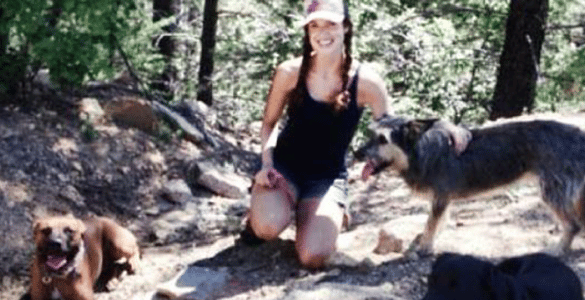
A pair of dogs on the trails with Lindsay from Dr. Tim Love's office in Oklahoma City

The staff at the offices of Dr. Tim Love in Oklahoma City like to take care of their patients. But their compassion doesn’t end there. One employee does everything she can to care for dogs who have no one else to love them. Lindsay, a nurse at Dr. Tim R. Love, MD’s office, has rescued several dogs who needed some tender loving care.

“Dogs are voiceless, and I feel it’s our responsibility to care and advocate for them,” Lindsay said. Teaming with her sister in Tulsa, Lindsay helps find homes for dogs who have been abandoned, abused, or are simply homeless and facing an uncertain future.

“My sister and I often work together to make things happen,” she said. “We collaborate to find foster homes, rescues or permanent home for dogs. We network with other active dog lovers and rescuers to arrange transport of the dogs and whatever else is needed. We both do what we can to help when we can, but of course we can’t help them all.”

That’s where others can fit in, and Lindsay encourages everyone to do their part, including being a responsible pet owner. Her advice:

SPAY and NEUTER your pets. Don’t contribute to an overpopulation problem by allowing your animals to breed unfettered. There are about 2.4 million healthy adoptable cats and dogs – and about one in every thirteen seconds are put down in U.S. shelters each year. There are low cost clinics everywhere such as Spay OK, Pet Medical Center of Edmond, Neuter Sooner, Street Cats, OK Alliance for Animals, Southern Agricultural and the Humane Society, Animal Birth Control Project and Smart Choice.

ADOPT. Buying a dog encourages breeding. Every dog that’s purchased takes the place of a dog that is on death row that could have been placed with a loving family. There are usually rescues for every breed of dog, and the shelters are full of pure bred dogs (dogs that were bred and then turned over to shelter at some point) and tons of other great dogs. They just want a warm bed and food and love! Rescue dogs are the best dogs. It’s like they know you saved them and are forever grateful. They are by no means ‘broken’! Check out the Central OK Humane Society or the Oklahoma City Animal Shelter to find your next family member.

BE A RESPONSIBLE DOG OWNER. Don’t get a dog if you think for any reason you would not want the dog anymore (having kids, moving to an apartment, work schedule, etc.) Educate yourself about what breed works best for you before you adopt. And if there is a behavior issue, seek a professional. It doesn’t mean the dog is bad or you should give up on it.

Michael Mehtala is a dog trainer who loves to help dogs – especially rescue dogs with behavioral issues. He is very affordable and wants to decrease the number of shelter dogs due to behavioral problems. Find him on Facebook. Only adopt if they are going to be permanent family members. They are not disposable. Shelters are not rescues. Unfortunately, most of the dogs in shelters do not make it out.

VOLUNTEER. Support a rescue or shelter by volunteering. Fostering a dog is a great way for people to “try out” being a dog parent or to try out a dog to see if it’s a good fit. Rescues have to have fosters in order to save dogs. The dogs need a temporary place to live until a permanent home is found. These places also need donations.

Pit bulls are one of Lindsay’s favorite breed of dogs and she wants everyone to know that pit bulls are not how they’re portrayed. “Don’t judge them or be scared of them based on hearsay,” Lindsay said. “Most make great pets – they’re energetic, goofy, smart, loyal,and extremely cuddly. Sadly, pit bulls are euthanized more than any breed because of the misconceptions surrounding them.”

Most recently, Lindsay became aware of a kennel in Mounds, Oklahoma that will actually board “un-homed” dogs for only $2 per day until they can be placed in either permanent or foster homes. Lindsay drove a pit bull there to ensure its safety until future placement. She also encourages people to help in any way they can, no matter how small. She recommends an app called “Walk For the Dog” that donates money each mile you walk to the Dog Rescue of your choice. “Sometimes helping can be that easy,” Lindsay said.

You make it look easy, Lindsay, because it’s so obvious that you love animals. Your efforts are greatly appreciated and we’re proud to have you as part of our team.

For the LOVE of Dogs

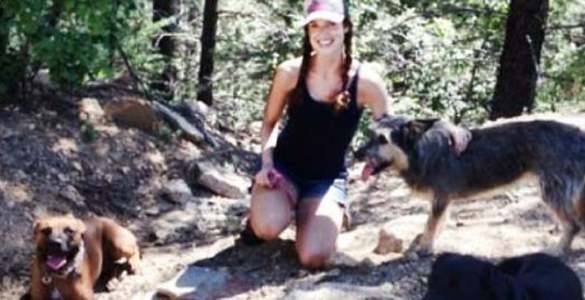
A pair of dogs on the trails with Lindsay from Dr. Tim Love's office in Oklahoma City

The staff at the offices of Dr. Tim Love in Oklahoma City like to take care of their patients. But their compassion doesn’t end there. One employee does everything she can to care for dogs who have no one else to love them. Lindsay, a nurse at Dr. Tim R. Love, MD’s office, has rescued several dogs who needed some tender loving care.

“Dogs are voiceless, and I feel it’s our responsibility to care and advocate for them,” Lindsay said. Teaming with her sister in Tulsa, Lindsay helps find homes for dogs who have been abandoned, abused, or are simply homeless and facing an uncertain future.

“My sister and I often work together to make things happen,” she said. “We collaborate to find foster homes, rescues or permanent home for dogs. We network with other active dog lovers and rescuers to arrange transport of the dogs and whatever else is needed. We both do what we can to help when we can, but of course we can’t help them all.”

That’s where others can fit in, and Lindsay encourages everyone to do their part, including being a responsible pet owner. Her advice:

SPAY and NEUTER your pets. Don’t contribute to an overpopulation problem by allowing your animals to breed unfettered. There are about 2.4 million healthy adoptable cats and dogs – and about one in every thirteen seconds are put down in U.S. shelters each year. There are low cost clinics everywhere such as Spay OK, Pet Medical Center of Edmond, Neuter Sooner, Street Cats, OK Alliance for Animals, Southern Agricultural and the Humane Society, Animal Birth Control Project and Smart Choice.

ADOPT. Buying a dog encourages breeding. Every dog that’s purchased takes the place of a dog that is on death row that could have been placed with a loving family. There are usually rescues for every breed of dog, and the shelters are full of pure bred dogs (dogs that were bred and then turned over to shelter at some point) and tons of other great dogs. They just want a warm bed and food and love! Rescue dogs are the best dogs. It’s like they know you saved them and are forever grateful. They are by no means ‘broken’! Check out the Central OK Humane Society or the Oklahoma City Animal Shelter to find your next family member.

BE A RESPONSIBLE DOG OWNER. Don’t get a dog if you think for any reason you would not want the dog anymore (having kids, moving to an apartment, work schedule, etc.) Educate yourself about what breed works best for you before you adopt. And if there is a behavior issue, seek a professional. It doesn’t mean the dog is bad or you should give up on it.

Michael Mehtala is a dog trainer who loves to help dogs – especially rescue dogs with behavioral issues. He is very affordable and wants to decrease the number of shelter dogs due to behavioral problems. Find him on Facebook. Only adopt if they are going to be permanent family members. They are not disposable. Shelters are not rescues. Unfortunately, most of the dogs in shelters do not make it out.

VOLUNTEER. Support a rescue or shelter by volunteering. Fostering a dog is a great way for people to “try out” being a dog parent or to try out a dog to see if it’s a good fit. Rescues have to have fosters in order to save dogs. The dogs need a temporary place to live until a permanent home is found. These places also need donations.

Pit bulls are one of Lindsay’s favorite breed of dogs and she wants everyone to know that pit bulls are not how they’re portrayed. “Don’t judge them or be scared of them based on hearsay,” Lindsay said. “Most make great pets – they’re energetic, goofy, smart, loyal,and extremely cuddly. Sadly, pit bulls are euthanized more than any breed because of the misconceptions surrounding them.”

Most recently, Lindsay became aware of a kennel in Mounds, Oklahoma that will actually board “un-homed” dogs for only $2 per day until they can be placed in either permanent or foster homes. Lindsay drove a pit bull there to ensure its safety until future placement. She also encourages people to help in any way they can, no matter how small. She recommends an app called “Walk For the Dog” that donates money each mile you walk to the Dog Rescue of your choice. “Sometimes helping can be that easy,” Lindsay said.

You make it look easy, Lindsay, because it’s so obvious that you love animals. Your efforts are greatly appreciated and we’re proud to have you as part of our team.