What is a Brow Lift and Why Should I Get One?

what-is-a-brow-lift

Are you sick and tired of looking sick and tired? Does waking up and looking into the mirror make you feel sad? You are not alone. Few people are happy with the outward signs of aging. Now when you glance at yourself, your outside appearance does not match your youthful emotions and vigor. It does not need to be that way.

Sagging skin, forehead wrinkles and frown lines are a natural part of the aging process that happens to us all but the extent of which is unique to the individual. While it is not possible to turn back the clock, it is possible to reverse some signs of aging with a brow lift. Find out more about brow lift procedures and determine if it is the right fit for you.

What is a brow lift?

A brow lift is also known as a forehead lift. Those who request a brow lift want to make the following changes to their appearance:

  • They want to reduce the horizontal lines that develop across the forehead, between the eyes, and on the bridge of the nose.
  • They want to lessen the vertical creases, or frown lines, that develop between their eyebrows.
  • They want to lift sagging brows that are obscuring the upper eyelids.
  • They want to look alert and more youthful with adjustment to the placement of their brows.

Why does someone get a brow lift?

People get brow lifts for to boost their confidence and create an appearance that is aligned with how they see themselves. When people feel happier about their appearance, they project more confidence about themselves. Confident individuals feel more prepared to engage with others. The boost in their self-esteem helps them to feel more attractive personally. Individual results vary, but many are happy with having a more youthful appearance.

Are there risks to having a brow lift?

A brow lift is a surgical procedure. With any surgery, there are inherent risks. All risks will be discussed with the plastic surgeon prior to initiating any work. You should be a suitable candidate for a brow lift.

As with any surgery, due consideration must be given to unintended risks. Take the time to fully understand the procedure. Patients should receive a brow lift in an accredited facility, hospital or licensed ambulatory surgical center. Make arrangements for an adult to drive you to and from the location and to remain with you for the first night after the procedure is performed.

How long does the procedure take?

The time for surgery can vary based on techniques used, the extent of changes and any other related types of surgeries selected. Wound healing takes from 10 to 14 days. Proper steps must be taken in order to ensure good results. Patients are ready to return to work and normal activity after two weeks. Bruising and some swelling is still typical after this time, but cosmetic use is sufficient to assist if this is an issue. Healing does continue after that time and it make take several months to completely recover.

How do I maintain my results?

It is best to follow the specific instructions given and follow up with your plastic surgeon. Refraining from smoking and tanning will help to maintain healthier skin and surgery results. Speak with a qualified plastic surgeon and ask questions to find out more about brow lift procedures. You can feel better about your appearance. Contact us today to schedule a complimentary consultation.


Dr. Tim Love named best cosmetic surgeon in The Oklahoman Readers’ Choice Awards

For the sixth consecutive year, Dr. Tim Love has been named the best cosmetic surgeon in Oklahoma City in voting by The Oklahoman Readers’ Choice Awards. “We’re honored and delighted to have been chosen by readers for this honor,” Dr. Tim R. Love, MD said after receiving the news. “It’s special because these are people in our community who have voted for us. The entire team works hard to earn the trust we receive from the people of Oklahoma City and the state. We’re tickled to be honored for a sixth consecutive year.”

Dr. Tim R. Love, MD’s office is located at 11101 Hefner Pointe Dr, Ste. 104, in Oklahoma City, where he’s been seeing patients for more than three decades. He’s a member of the American Society of Plastic Surgeons (ASPS), the American Society for Aesthetic Plastic Surgery, the Lipoplasty Society of North America, the International Society of Hair Restoration Surgery and the American Society for Laser Medicine and Surgery.

He is one of the foremost authorities on cosmetic and reconstructive plastic surgery in Oklahoma. In addition to The Oklahoman Readers’ Choice Award honor, Dr. Tim R. Love, MD has won the best plastic surgeon award from Oklahoma Magazine, SLICE Magazine, and Oklahoma Gazette numerous times.

His excellent reputation in the industry is supported by countless positive reviews from patients and his involvement and commitment to the community. If you’re thinking of a cosmetic procedure contact Dr. Tim R. Love, MD for a consultation.

For the LOVE of Dogs

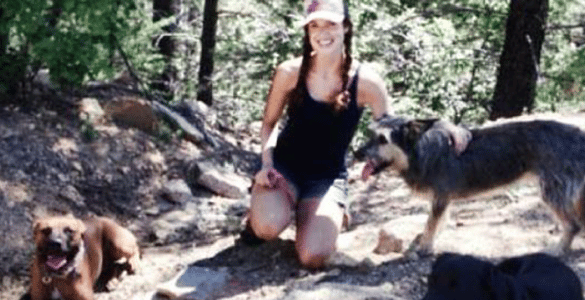
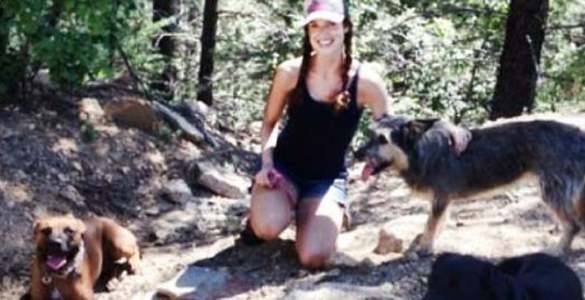
A pair of dogs on the trails with Lindsay from Dr. Tim Love's office in Oklahoma City

The staff at the offices of Dr. Tim Love in Oklahoma City like to take care of their patients. But their compassion doesn’t end there. One employee does everything she can to care for dogs who have no one else to love them. Lindsay, a nurse at Dr. Tim R. Love, MD’s office, has rescued several dogs who needed some tender loving care.

“Dogs are voiceless, and I feel it’s our responsibility to care and advocate for them,” Lindsay said. Teaming with her sister in Tulsa, Lindsay helps find homes for dogs who have been abandoned, abused, or are simply homeless and facing an uncertain future.

“My sister and I often work together to make things happen,” she said. “We collaborate to find foster homes, rescues or permanent home for dogs. We network with other active dog lovers and rescuers to arrange transport of the dogs and whatever else is needed. We both do what we can to help when we can, but of course we can’t help them all.”

That’s where others can fit in, and Lindsay encourages everyone to do their part, including being a responsible pet owner. Her advice:

SPAY and NEUTER your pets. Don’t contribute to an overpopulation problem by allowing your animals to breed unfettered. There are about 2.4 million healthy adoptable cats and dogs – and about one in every thirteen seconds are put down in U.S. shelters each year. There are low cost clinics everywhere such as Spay OK, Pet Medical Center of Edmond, Neuter Sooner, Street Cats, OK Alliance for Animals, Southern Agricultural and the Humane Society, Animal Birth Control Project and Smart Choice.

ADOPT. Buying a dog encourages breeding. Every dog that’s purchased takes the place of a dog that is on death row that could have been placed with a loving family. There are usually rescues for every breed of dog, and the shelters are full of pure bred dogs (dogs that were bred and then turned over to shelter at some point) and tons of other great dogs. They just want a warm bed and food and love! Rescue dogs are the best dogs. It’s like they know you saved them and are forever grateful. They are by no means ‘broken’! Check out the Central OK Humane Society or the Oklahoma City Animal Shelter to find your next family member.

BE A RESPONSIBLE DOG OWNER. Don’t get a dog if you think for any reason you would not want the dog anymore (having kids, moving to an apartment, work schedule, etc.) Educate yourself about what breed works best for you before you adopt. And if there is a behavior issue, seek a professional. It doesn’t mean the dog is bad or you should give up on it.

Michael Mehtala is a dog trainer who loves to help dogs – especially rescue dogs with behavioral issues. He is very affordable and wants to decrease the number of shelter dogs due to behavioral problems. Find him on Facebook. Only adopt if they are going to be permanent family members. They are not disposable. Shelters are not rescues. Unfortunately, most of the dogs in shelters do not make it out.

VOLUNTEER. Support a rescue or shelter by volunteering. Fostering a dog is a great way for people to “try out” being a dog parent or to try out a dog to see if it’s a good fit. Rescues have to have fosters in order to save dogs. The dogs need a temporary place to live until a permanent home is found. These places also need donations.

Pit bulls are one of Lindsay’s favorite breed of dogs and she wants everyone to know that pit bulls are not how they’re portrayed. “Don’t judge them or be scared of them based on hearsay,” Lindsay said. “Most make great pets – they’re energetic, goofy, smart, loyal,and extremely cuddly. Sadly, pit bulls are euthanized more than any breed because of the misconceptions surrounding them.”

Most recently, Lindsay became aware of a kennel in Mounds, Oklahoma that will actually board “un-homed” dogs for only $2 per day until they can be placed in either permanent or foster homes. Lindsay drove a pit bull there to ensure its safety until future placement. She also encourages people to help in any way they can, no matter how small. She recommends an app called “Walk For the Dog” that donates money each mile you walk to the Dog Rescue of your choice. “Sometimes helping can be that easy,” Lindsay said.

You make it look easy, Lindsay, because it’s so obvious that you love animals. Your efforts are greatly appreciated and we’re proud to have you as part of our team.

Where Internal Meets External: Plastic Surgery Benefits to Mental Health

Plastic Surgery Benefits to Mental Health

With “did she or didn’t she” pictorials splashed across supermarket gossip rags and entire television series dedicated to plastic surgery as a way to tweak physical appearance for purely aesthetic reasons or in hopes of chasing some nebulous beauty ideal, it’s easy to forget that the many procedures that exist under the umbrella of plastic surgery aren’t simply for nose tweaks and lip plumping.

While there is certainly no shame in “gilding the lily,” so to speak, and emphasizing one’s inner beauty using procedures that buff, augment or reduce what nature has given us, plastic surgery has benefits far beyond those easily recognized by sight. For many, a trip to their doctor’s office is not just about outer beauty but also regaining ground mentally and emotionally.

Plastic surgery is a portal to holistic health, where sometimes changing the external is a mere means to transforming the internal. Some studies have shown that the long-term psychological and emotional outcome following surgery depends at least partially on the patient’s frame of mind prior to the procedure.

One such study conducted by experts at the University of Basel and reported in the Clinical Psychological Science journal evaluated 550 patients planning to undergo cosmetic surgery. Prior to their procedures, patients were asked what they hoped to achieve; those who listed realistic outcomes related to better self-confidence and overall improved quality of life (versus patients who expressed unrealistic wishes for completely different lives or the disappearance of all their problems) reported less anxiety, more self esteem, and overall a healthier, happier existence.

“People undergoing plastic surgery just want to look normal–that is, they don’t want to stand out in an obvious way or to have features which cause comment or make them feel self-conscious.”

There’s a similar study courtesy of David Sarwer, PhD, who (among other notable positions) is an associate professor of psychology at the University of Pennsylvania School of Medicine’s Center for Human Appearance. Dr. Sarwer found that of his patient group, a staggering 87 percent reported feeling better about the body part that was operated on as well as improved body image overall. Best of all, perhaps, was their reports of less negative body emotions in relation to social situations.

In other words, for these patients, their procedures made it easier and even more enjoyable to go out in public and interact with others. It’s easy to see how those improvements could translate into better opportunities not just for interpersonal relationships but also for self-love and even professional advancement.

According to Susan Thorpe, a psychology lecturer at the University of Surrey and cosmetic surgery researcher, people undergoing plastic surgery just “want to look normal – that is, they don’t want to stand out in an obvious way or to have features which cause comment or make them feel self-conscious. They also want their physical appearance to be more in line with their personalities and feel that they want all the bits of their bodies to match.”

It’s a sad but widely acknowledged fact that being “different” is not just damaging to self esteem but it also puts people, teens especially, at risk of being mocked or bullied for daring to look different from their peers. The National Bullying Prevention Center found that nearly 1 in 3 students reported being bullied in 2013; another study cited by the center found that only 64 percent of children bullied actually reported it.

Erica Morgo, a high school senior interviewed by ABC News, knows how it feels to be taunted due to perceived imperfections. In sixth grade, Erica was so severely harassed by classmates over her “big nose” that she suffered from depression and missed nearly a month’s worth of school. Ultimately, the teen tried to break her nose against a door, causing her mother to realize that something had to be done. The answer for Erica Morgo was rhinoplasty and a much happier time in high school. For thousands of teens like Erica, plastic surgery isn’t simply a band-aid but rather a way to reclaim confidence and remove barriers that could otherwise influence their ability to make friends and even graduate school.

For some patients, the physical source of dissatisfaction isn’t genetic but rather traumatic. Military veterans wounded in combat are turning to plastic surgery in hopes of reconstructing everything from facial lacerations to severely injured or even amputated limbs. Faces of Honor offers veterans with face, head or neck injuries access to pro-bono medical services in hopes that cosmetic surgery will have positive impact on each patient’s ability to transition back to civilian life. By repairing external damage, plastic surgery can help to minimize the daily visual reminder of past trauma, and for those who might not want such a conspicuous symbol or who dread being asked about its origin, these procedures can offer a priceless way to move forward.

There are non-military casualties of war who benefit from plastic surgery, too. The story of 18-month-old Teeba Fadhil is a powerful example. Teeba was riding in a taxi in Baghdad in 2003 when it was hit by an IED, killing her three-year-old brother instantly and leaving Teeba in the hospital for more than two months, suffering from significant scarring due to burns on her hands and head. Eventually, a charity organization heard of Teeba’s plight and brought her to University Hospital in Cleveland, and to Dr. Arun Gosain. Dr. Gosain’s painstaking reconstruction of Teeba’s face and hands gave a young girl a second chance at a normal life. When she’s asked about her lingering injuries, as recovery marches on, she says, “I’m growing my new face.”

Plastic surgery is a monumentally personal choice. Other than in situations in which the patient is suffering from body dysmorphic disorder (BDD) or other reason’s calling for outside intervention by an objective third party, the choice regarding whether or not to undergo a cosmetic procedure should be the patient’s and the patient’s alone, with the understanding that in many cases patients’ goals aren’t just a smaller nose or smoother skin, but rather a chance to face the world feeling – and, yes, looking – the way they were meant to.

Selfie Improvement: How To Photograph Yourself Right Each Time

How To Shoot a Good Selfie

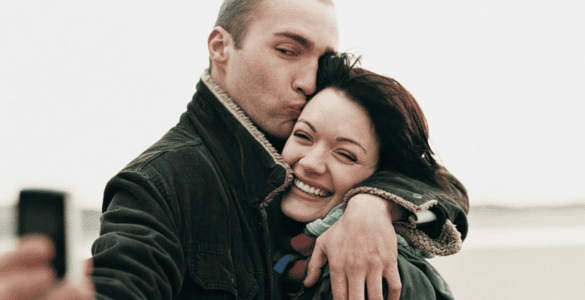
When Ellen DeGeneres snapped a selfie while hosting the 2014 Academy Awards ceremony it was an impulsive act that ended up having global implications. The famous photo was seen by more than 40 million people via social media and it has been estimated by one public relations firm to be worth close to $1 billion.  Your selfies aren’t going to be seen by 40 million people and they won’t include Julia Roberts and Meryl Streep, but they’re still valuable to you and for that reason it’s important to take care when snapping. The 400 people (maybe?) who see your selfie will appreciate it. Here are some tips to taking a great selfie each time.

Tip #1: Use Good Light Most smart phones come equipped with a flash, which may or may not trigger when needed. Regardless, natural light is the best and you should position yourself in the natural light as much as possible. Put the light 45 degrees to your side if possible, not in the back unless you have a natural reflector in front of you. If you’re on the beach get out of the bright sun or you risk being overexposed.

Tip #2: Know which side is your best Do you have a “good side”? Accentuate it. Look back at previous photos of you and see which ones are the best. What position were you in? Mimic that.

Tip #3: Smile and have fun Everyone looks better with a smile and people respond much more favorably to images that show people having fun. So, why not smile and have fun when you’re taking your selfie? It may seem silly to smile when you’re by yourself, but go ahead and flash your toothy grin. Make yourself laugh, you’ll be surprised at how natural your smile looks when you’re laughing.

Tip #4: Select an interesting background Context can be everything. Place yourself somewhere engaging and interesting. Stand in front of a scenic view. Place yourself next to a funny situation or ironic scene. Seek out some color or alternatively, place yourself on a simple, dark background that complements you and makes you the focal point of the photo.

Tip #5: No mirrors Please, please, puhleeaze, for the love of Kodak, don’t take a selfie in the mirror. We’ve seen it, we’ve been there, it’s been done, it’s been overdone, it looks cheesy. It looks bad. Also – flip your your phone settings so your selfies aren’t reversed. It’s weird when that cute mole on your left cheek is suddenly on your right.

Tip #6: Heads up! In most cases you look better when your head is up, not tilted downward. There are lots of reasons for this (the pesky double chin for example), so keep your head up and make eye contact.

Tip #7: Stick it Do you know what a selfie stick is? It might be helpful if you want to take selfies from more than an arm’s length away. A good selfie stick will hold your camera or phone securely and extend to several feet. Want to be really sophisticated? Download an app like Snap Remote (available for the iPhone or Android) and use it with a handheld button that works with most camera phones. You’ll be the wizard of selfies.

Tip #8: Use a filter Some photographers hate filters, but for the average everyday person with a cell phone camera, a filter can take your photo from average to good or from good to great. A filter can not only instantly add a cool photo effect, it can also help hide blemishes and other imperfections in your photo. Instagram offers dozens of filters and you can also quickly share it with people all over the world. Just like Ellen.

Selfie Improvement: How To Photograph Yourself Right Each Time

How To Shoot a Good Selfie

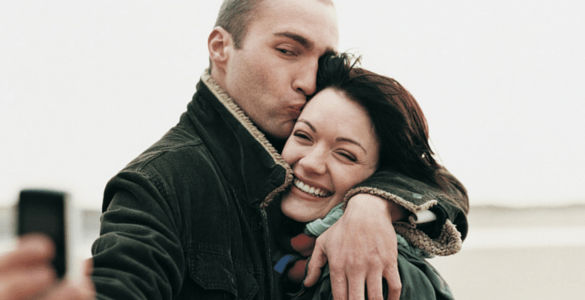
When Ellen DeGeneres snapped a selfie while hosting the 2014 Academy Awards ceremony it was an impulsive act that ended up having global implications. The famous photo was seen by more than 40 million people via social media and it has been estimated by one public relations firm to be worth close to $1 billion.  Your selfies aren’t going to be seen by 40 million people and they won’t include Julia Roberts and Meryl Streep, but they’re still valuable to you and for that reason it’s important to take care when snapping. The 400 people (maybe?) who see your selfie will appreciate it. Here are some tips to taking a great selfie each time.

Tip #1: Use Good Light Most smart phones come equipped with a flash, which may or may not trigger when needed. Regardless, natural light is the best and you should position yourself in the natural light as much as possible. Put the light 45 degrees to your side if possible, not in the back unless you have a natural reflector in front of you. If you’re on the beach get out of the bright sun or you risk being overexposed.

Tip #2: Know which side is your best Do you have a “good side”? Accentuate it. Look back at previous photos of you and see which ones are the best. What position were you in? Mimic that.

Tip #3: Smile and have fun Everyone looks better with a smile and people respond much more favorably to images that show people having fun. So, why not smile and have fun when you’re taking your selfie? It may seem silly to smile when you’re by yourself, but go ahead and flash your toothy grin. Make yourself laugh, you’ll be surprised at how natural your smile looks when you’re laughing.

Tip #4: Select an interesting background Context can be everything. Place yourself somewhere engaging and interesting. Stand in front of a scenic view. Place yourself next to a funny situation or ironic scene. Seek out some color or alternatively, place yourself on a simple, dark background that complements you and makes you the focal point of the photo.

Tip #5: No mirrors Please, please, puhleeaze, for the love of Kodak, don’t take a selfie in the mirror. We’ve seen it, we’ve been there, it’s been done, it’s been overdone, it looks cheesy. It looks bad. Also – flip your your phone settings so your selfies aren’t reversed. It’s weird when that cute mole on your left cheek is suddenly on your right.

Tip #6: Heads up! In most cases you look better when your head is up, not tilted downward. There are lots of reasons for this (the pesky double chin for example), so keep your head up and make eye contact.

Tip #7: Stick it Do you know what a selfie stick is? It might be helpful if you want to take selfies from more than an arm’s length away. A good selfie stick will hold your camera or phone securely and extend to several feet. Want to be really sophisticated? Download an app like Snap Remote (available for the iPhone or Android) and use it with a handheld button that works with most camera phones. You’ll be the wizard of selfies.

Tip #8: Use a filter Some photographers hate filters, but for the average everyday person with a cell phone camera, a filter can take your photo from average to good or from good to great. A filter can not only instantly add a cool photo effect, it can also help hide blemishes and other imperfections in your photo. Instagram offers dozens of filters and you can also quickly share it with people all over the world. Just like Ellen.