How much does a breast augmentation cost?

Whether you’re looking to restore volume lost due to pregnancy, breastfeeding, or age, or if you simply want to boost your self-confidence, breast augmentation can help give you the beautifully shaped body you’ve always wanted. Breast augmentation is a surgical procedure that uses implants, fat grafting, or a combination of both to change the shape and size of your breasts, and it’s one of the most common and most popular cosmetic procedures.

However, with estimates ranging from $5,000 to nearly $13,000, varying widely by who you ask or what website you visit, it can be difficult to determine just how much breast implants cost.

In Oklahoma, for example, where you’ll find some of the country’s most affordable plastic surgery services, the average cost of breast implant surgery can be anywhere between $6,500 and $12,500, well below the national average. However, that is just an average and doesn’t always include the various fees and expenses associated with breast implants; breast augmentation is highly individualized, so what one woman pays for hers may not be what you pay for yours. Moreover, more important than the cost of your procedure is the skill and experience of the cosmetic surgeon.

For the best and most accurate cost estimate for your breast augmentation, it’s always best to schedule a consultation with an experienced, board-certified plastic surgeon like Tim R. Love, MD, of Love Plastic Surgery & Aesthetics in Oklahoma City. By meeting with a doctor in person, you can get a personalized quote and a better sense of what your breast augmentation will cost and entail. At Love Plastic Surgery & Aesthetics, breast augmentation surgery using round gel implants typically starts at around $5,500, while gummy bear (cohesive gel) implants start at around $6,700. In addition, breast implant patients of Love Plastic Surgery & Aesthetic benefit from Dr. Love’s more than 30 years of experience as one of the region’s premier plastic surgeons.  

What is Included in the Cost of a Breast Augmentation

The total cost of your breast implants will include several variables, including:

Consultation fee

The decision to charge a consultation fee is at the discretion of the plastic surgeon, so the standard and the rate will vary depending on the practice. However, because a surgeon’s time and expertise are valuable, a modest consultation fee is often enough to make sure a patient is a seriously interested candidate before she is scheduled for the procedure. In some cases, surgeons will apply consultation fees towards scheduled treatment.

The surgeon’s fee

This is a fee that compensates the surgeon and is based on the surgeon’s experience and the type and complexity of procedure that will be used for the augmentation. According to the American Society of Plastic Surgeons, the national average surgeon’s fee is between $4,294 and $4,866.

Dr. Love is board-certified by the American Board of Plastic Surgery and is a member of both the American Society for Aesthetic Plastic Surgery and the American Society of Plastic Surgeons.

Hospital or outpatient surgery center facility fees

Breast augmentation surgery should be performed in a hospital or outpatient surgery setting, and there are fees for using the operating space that include the costs for the facility as well as the prep and observation time involved in surgical patient care.

Dr. Love is credentialed and performs the vast majority of his surgeries at the state-of-the-art Oklahoma Surgicare, which boasts sophisticated patient support resources, technical equipment, and instrumentation, as well as a highly-skilled team of anesthesiologists, registered nurses, and other qualified medical personnel specially trained in surgical recovery and care.

Anesthesia fee

Anesthesia fees vary from practice to practice based on different factors. Some plastic surgeons employ a single anesthesiologist for all cases. In other practices, anesthesia groups affiliated with the surgical center provide services and set fees. Additionally, some plastic surgeons offer local anesthetic plus sedation for breast augmentation surgery, most experienced surgeons—including Dr. Love—use general anesthetic provided by a board-certified anesthesiologist.

Dr. Love’s breast augmentation patients will be under the skilled and supervised care of some of the best board-certified anesthesiologists in the Oklahoma City area at Oklahoma Surgicare.

The cost of the implants themselves

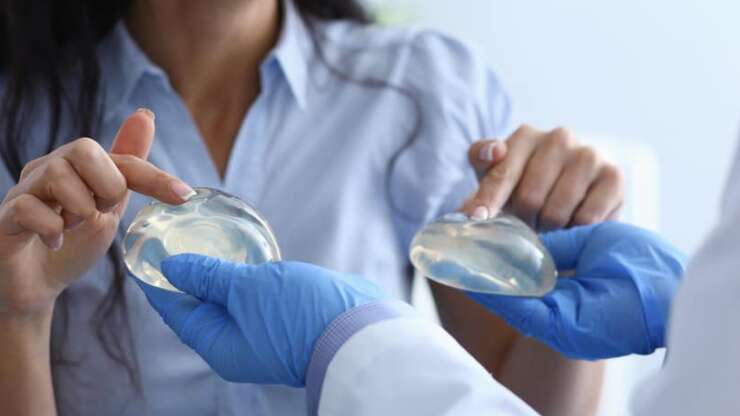
How much your implants cost will largely be determined by the type selected and the specifics of the materials used for the implants. On average, saline implants cost $1000 per pair, while silicone implants cost $2000 per pair. Gummy bear implants, also known as cohesive gel implants, provide the most realistic results, but tend to be the most expensive, averaging at least $2000 per pair.

Surgical garments

A surgical garment is applied to the operative site and provides medical-grade compression to aid in recovery and healing. Surgical garments or medical grade compression wraps provide safe and effective compression in an ideal manner to help implants settle naturally, limit swelling, and shorten recovery time.

Other factors that should be considered when determine the cost of your breast implants are the costs include post-op items that may not be costly in and of themselves, but can add up quickly, such as:

  • Prescriptions for pain medication
  • Post-surgery garments
  • Scar cream or silicone gel sheets

What Can Affect the Cost of Breast Augmentation

The actual cost of breast augmentation will depend on the surgery type, implant type, and many other factors, like:

The type of implant

Each type of implant has its own benefits, and it’s important to choose an implant type based on thorough consultation from a board-certified plastic surgeon like Dr. Love as well as your personal preference about how they look and feel.

Dr. Love has extensive experience in gummy bear (cohesive silicone gel) implants, which are anatomically shaped with a textured surface that is less likely to cause rippling or wrinkling of the skin. He was one of the first plastic surgeons in the country to introduce these revolutionary implants to U.S. patients, giving breast augmentation patients another option for more natural breast implant results.

The size and shape of your implants

Larger or more specialized implants may require additional materials and customization, which can in turn affect the overall price.

Augmentation techniques

This refers to whether the surgeon will enhance your breast with implants or through fat grafting/fat transfer, which uses fat tissue removed from another part of the body to augment the breasts. Fat grafting or fat transfer augmentation requires two separate procedures—liposuction to harvest the fat and then the placement procedure—so it takes more time in the operating room, increasing the cost. Placement techniques, whether implant placement (over or under the muscle) or incision placement (in the breast fold or areola) will also affect the complexity–and therefore the price–of your surgery.

Additional procedures

Breast augmentation is frequently combined with a lift to produce optimal results. While breast augmentation with a lift will cost more than breast augmentation alone, you will save money and downtime by combining the two surgeries while enjoying better, more precise results because the surgeon can adjust the implant size and position to complement the newly lifted breasts.

Timing

Many people choose to have their breast augmentation done in the winter when they have more time off, or so they can be fully recovered before summer. However, by electing to do your procedure in the spring or summer when there is less demand, you may be able to take advantage of reduced pricing.

Location

Breast augmentation in higher-demand metropolitan areas like Los Angeles or Dallas will cost more than somewhere like Oklahoma City. At Love Plastic Surgery & Aesthetics, our breast augmentation patients receive the benefit of professional, affordable services performed by one of the nation’s leading and most experienced plastic surgeons.

Experience of the surgeon

Surgeons with extensive experience, significant credentials, and specialized training will cost more than those with less experience or training. While this doesn’t mean that the most expensive surgeon is the one who’s right for you, it does mean that you’re likely to see higher prices from surgeons who charge more based on their level of expertise.

Dr. Love has pioneered cutting-edge breast augmentation technology and techniques for more than 30 years, and is a highly qualified and skilled specialist in breast procedures. His expertise ensures every patient receives tailored treatment and beautiful, natural results that will last for years.

The length of your procedure

The time needed for the procedure is usually fairly consistent and predictable, so you’ll have a good idea of what this charge will be before your surgery. However, if it lasts longer for some reason, that additional time in the operating room can increase the cost.

Implant replacement and correction surgeries

Breast implants are not lifetime devices, so you should make the assumption that you will have another breast surgery one day. As long as you are happy with how your implants look and you have no symptoms of rupture, you won’t have to have another one just because you’ve had implants for 10 years. However, if you do eventually need one, replacement and correction surgeries are highly individualized and more likely to include a breast lift, typically making them more expensive than an initial augmentation.

How to Make Breast Augmentation More Affordable

Health insurance will not typically cover cosmetic breast augmentation costs, related complications, or another surgery to revise their appearance, so you will be paying out of pocket. However, in addition to offering affordable breast augmentations, Love Plastic Surgery & Aesthetic has also partnered with several medical financing providers to allow for low-interest or interest-free financing of your procedure. These plans typically run for 12 months, allowing you to spread out your payment over the course of a year. Some even allow for no payments at all until the 12 months are over.

CareCredit

CareCredit offers patients a medical line of credit to help pay for healthcare expenses, including all types of cosmetic surgery and procedures. Unlike regular credit cards, CareCredit offers promotional financing options, including interest-free financing for a limited time, and you can finance up to 80% of your procedure costs, making payments in monthly installments. You can go to carecredit.com to prequalify. 

Alphaeon Credit

Like CareCredit, Alphaeon Credit is specifically designed for healthcare expenses, including plastic surgery. It offers flexible payment options, including promotional financing with low-interest rates. You can visit goalphaeon.com to prequalify.

Here’s more on the benefits of financing your breast augmentation procedure.

Discover the Best Breast Augmentation Experience in Oklahoma City at Love Plastic Surgery & Aesthetics

Although price is important—and you don’t want to pay exorbitantly for breast implants—you shouldn’t choose a plastic surgeon for your breast implants based on cost alone. Breast augmentation can be a life-altering experience and requires careful research and consideration. To guarantee safe and beautiful results, you should always select a trained and experienced board-certified plastic surgeon who has a robust track record of patient success and whose methods and aesthetic style match your goals.

Dr. Tim R. Love’s dedication to detail, personalized care, and superior results have made him one of the top-rated and most highly sought-after surgeons for breast augmentation in the Oklahoma City area and beyond. He has spent his career committed to evidence-based and patient-centric cosmetic surgery, leading advancements that benefit all of his patients. He was selected to participate in the FDA’s historic CORE Gel Breast Implant study that introduced gel implants to U.S. patients and had continued to pursue industry-leading methods for helping women discover their most beautiful selves.
How Weight Loss Can Affect Your Breast Implants

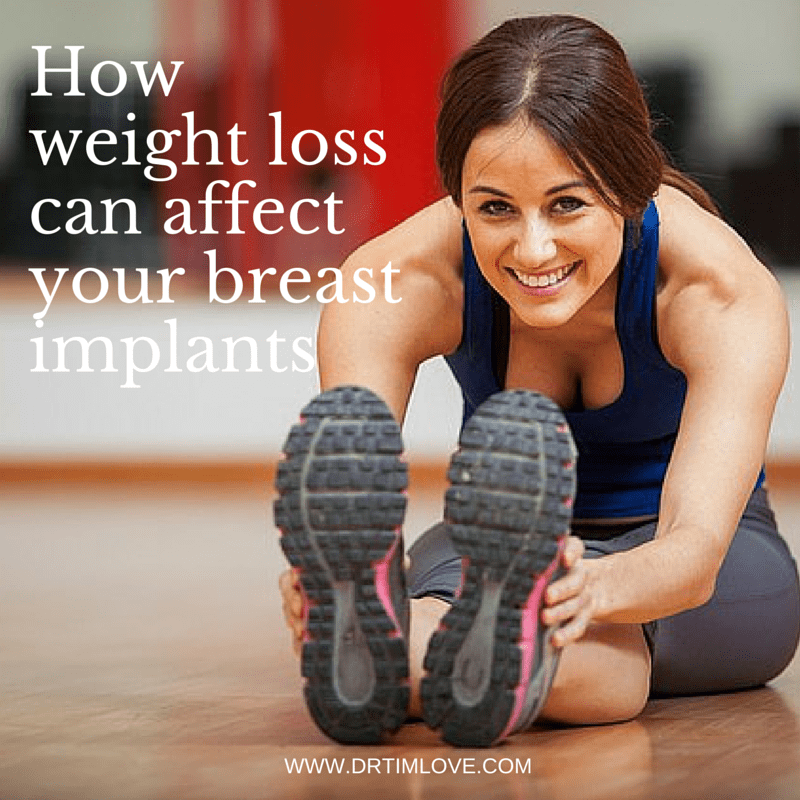
DR TIM LOVE - TUMMY TUCK (1)Many women get a breast augmentation as part of a comprehensive plan to enhance their overall health and appearance. This often includes a commitment to losing weight or building muscle through exercise, especially after significant life events such as completing child-bearing. Understanding the relationship between weight loss and breast implants is crucial for those considering or who have already undergone this procedure.

How does weight loss impact breast implants?

A moderate amount of weight loss is unlikely to significantly affect the appearance or integrity of breast implants. Typically, a substantial weight loss — a significant percentage of the individual’s total body weight — is necessary to see notable changes in breast size and potentially affect the implants’ appearance. For an average-sized woman, a weight fluctuation of 10-15 pounds is generally not enough to cause a noticeable difference. However, larger weight changes may lead to more pronounced effects.

The impact also depends on the composition of breast tissue — the ratio of fatty tissue to glandular tissue. Women with a higher proportion of fatty tissue in their breasts may notice more noticeable changes with weight loss. It’s important to consult with a family doctor and/or plastic surgeon if planning significant weight loss after surgery, as they can provide tailored advice based on individual circumstances.

Will my breast implants still look good after weight loss?

In most cases, breast implants will continue to look aesthetically pleasing even after weight loss. This is particularly true for women who had less fatty tissue in their breasts initially and opted for augmentation to enhance their size and shape. Since smaller breasts typically have less fat, the loss of weight is less likely to significantly alter the augmentation. In some instances, weight loss may even enhance the appearance of the implants, making the breasts look fuller and more proportionate to the rest of the body. However, individual results can vary, and it’s essential to closely monitor any changes in the breasts during and after the weight loss journey.

Advice and Monitoring

Breast augmentation is a highly individualized procedure, and the effects of weight loss on implants can vary from person to person. Regular follow-up appointments with a plastic surgeon are key to ensuring that the implants maintain their desired appearance. These check-ups allow for timely adjustments or revisions if necessary, ensuring long-term satisfaction with the results.

Considering breast implants?

If you’re contemplating breast augmentation, it’s vital to choose a reputable surgeon and discuss all aspects of the procedure, including how future weight loss might impact the results. A thorough consultation will help set realistic expectations and prepare for any potential changes post-weight loss. Remember, maintaining open communication with your healthcare provider before and after surgery is essential for achieving the best possible outcome.

For more information or to schedule a consultation, feel free to contact us. We’re here to guide you through every step of your breast augmentation journey, ensuring your health and aesthetic goals are met.

Breast Implants or Breast Lifts? The Winner Is…

From Playboy’s Swimsuit edition to the “Save Second Base” campaign, it’s pretty clear: we love breasts. With the amazing technology plastic surgery has brought to the table, women no longer have to be content with their natural breasts, either. The popularity of the breast implant is no secret, but another procedure may be usurping its popularity.

Back away from the pro/con list and let us help!

The Implant versus the Lift: Which One and Why?

Breast implantation surgery was the most popular cosmetic procedure in 2012, with 286,000 performed in the United States alone.  With statistics that high, it may be hard to believe that something as simple as a breast lift could be a contender for popular procedures. We’re here to help you learn the difference between the two, and, more importantly, which one is right for you.

The Implant

  • Breast implants serve to change the size, form, and texture of breasts. The surgery is performed for: post-mastectomy reconstruction, to correct genital defects or deformities, for gender reassignment surgeries, and also for purely aesthetic reasons.
  • There are three main types, named for their filling material: saline solution, silicone gel, and composite filler. The type of implant used depends upon your individual needs and preferences, and your doctor may help you determine which one is the best fit.
  • Recently, there have been a lot of questions over the impact implants could have on breastfeeding, mammography, and complications. Fortunately, there have not been any negative effects discovered.
See, much better.
See, much better.

The Lift

  • Breast lifts are primarily employed to take the existing breast tissue that may have sagged due to age or weight loss and raise it into its original location. It can be combined with a breast implant surgery to create larger, fuller breasts that are raised and combined with existing breast tissue.
  • Breast lifts are relatively simple procedures that depend on the tissue viability and the nipple-areola complex (NAC) to ensure that the breasts remain sensitive and functional for breastfeeding and lactation.

So, what’s the difference?

Ultimately, a breast lift will not change the size of the breast, but will use the existing tissue and create a natural repositioning. Breast implants are for increasing the size of the breasts in addition to re-positioning.  Surprisingly, breast lifts have been on the rise in plastic surgery.

Although breast implants are still one of the most popular procedures, more and more women are asking to use their existing breast tissue. If you’re not sure which procedure is right for you, talk to us! We’d love to help you explore your options and get back to feeling your b(r)ea(a)st! (See what we did there?)

Article from April 1999 Allure Magazine Article reprinted with permission of its author, Joan Kron

After four children and a glimpse of what gravity had in store for her, one woman chose silicone breast implants. It wasn’t easy.

By Joan Kron

It was barely two weeks after Christmas, and things were just returning to normal. She was awake at 6:30 that morning as usual, glancing occasionally from her pillow toward the TV and the local Oklahoma City news. After nudging her husband out of bed, she went from room to room rousing their four kids. She checked that teeth were brushed and shoelaces were tied – and managed to shower and dress herself. Nothing fancy: leggings and an oversize denim shirt, clothes that would be easy to get in again later that day, after it was over.

She hadn’t eaten since midnight and had been instructed not to eat this morning. But the children lined up on stools at the kitchen bar didn’t notice their mother was skipping breakfast. She fixed an Eggo waffle for one child, toast and cereal for the others, and coffee for her husband, who was taking the day off to be with her. While the kids loaded their backpacks, she loaded the dishwasher. If something were to go wrong today, she didn’t want to be remembered as someone who left dishes in the sink.

Everyone piled into the red Ford Expedition. It was still too early to drop the kids at school, so she’d arrange to leave them with a friend – one of three she had let in on her secret.

“That means the whole world knows,” she jokes now. But she’s hoping her parents never find out: “It made me feel like a schoolgirl, keeping things from Mom and Dad, but they’d be really upset if they knew what their daughter was doing.”

From the friend’s house, she and her husband headed for the operating room used by plastic surgeon Tim R. Love, where she handed over the two sturdy Warner’s bras she’d been told to buy for the occasion – a 34D and a 36D, without underwires – and became part of history.

“It didn’t feel historic,” says Debbie, as we’ll call her, of the breast implant surgery she underwent that morning. The stay-at-home mother was more concerned about ending up too chesty. “When I woke up from the anesthetic,” says Debbie, a size 6, “my first words were, ‘I hope I don’t look like Dolly.’”

Debbie, 41, won’t enter the record books for the size of her implants, which pumped up her bra size from a 34C , which she had trouble filling, to a full 34D. It’s what’s inside the implants that is notable. They are filled with silicone gel. Debbie is the first patient in the United States in seven years to be permitted to receive gel implants simply because she wanted larger breasts. And the future of silicone breast implants may depend on her continued good health. By July, some 500 women around the U.S. will join Debbie in this collective act of faith.

In 1992, after women began blaming their silicone implants for lupus, arthritis, and other autoimmune diseases, the Food and Drug Administration banned silicone-gel implants for cosmetic purposes – until the devices could be proven safe. In the ensuing panic, thousands of women rushed to have their silicone implants removed, and even more joined a class-action lawsuit against the manufacturers that culminated in a $4.25 billion settlement and the bankruptcy of Dow Corning.

During this moratorium, silicone-gel implants have been tightly controlled – available only for three medical conditions: for breast reconstruction in cancer patients after mastectomy; to replace implants that have ruptured or are problematic; and to repair birth defects, such as a sunken chest or misshapen breasts. And the health of anyone receiving these implants has to be tracked. But all that didn’t really bother Debbie.

“I’ve always been attractive and had a good body,” she says. “When you’re young, you don’t think your body will change. I never thought about implants. After four kids, I still looked good, but when I turned 40, things started going.” Swimsuit shopping clinched it. “I began to realize I didn’t look the same anymore. I was losing fullness. I couldn’t fill out my bra.”

She blames it on breast-feeding. Push-up bras helped, but “when I was out of my clothes, it bothered me,” she says. What she really wanted was natural fullness – or at least natural-looking fullness. A friend of hers had gotten implants, and Debbie thought they looked good. “I wanted restoration. You put new tires on a car – why not maintain our bodies if we have that option?”

For almost a decade, women like Debbie who just wanted to look better in a bra or bathing suit had no alternative but saline implants – which are actually silicone shells filled with salt water. Saline implants, though, are no panacea. They can leak, deflate, and rupture. Unless the patient has a great deal of breast tissue, the outline of the implant often can be seen, and the skin covering the implant can ripple like a flaccid water balloon. And just as with silicone implants, the body quickly forms a capsule of scar tissue around the foreign implant that may contract, becoming hard and painful.

Whatever the risks, women have been willing to take them. There are 120,000 implant operations performed each year, as many as there were before the implant crisis began. And the numbers are rising. Four out of five implant patients simply want bigger breasts.

“Most breast-implant candidates don’t want to be in your face or push your eyeballs out,” says Los Angeles plastic surgeon Barbara Hayden. “They are usually very intelligent women, but time or pregnancy has made them self-conscious about their drooping breasts.”

When Debbie first consulted Tim Love, in November, “I just assumed I would have saline. Without a doubt,” she says. “I felt it was salt water, not foreign to the body. If you had a leakage, you wouldn’t worry about it being a problem. I didn’t realize the container was silicone.” But later, Love informed her that silicone gel was an option and that medical trials of the implants were about to being.

Love was 1 of 24 doctors participating in the first study, run by McGhan Medical, the implant manufacturer. A small number of women who wanted cosmetic augmentation would be allowed to have silicone, on one condition: they had to agree to return to their doctor for checkups, MRIs (for some of the women), and quality-of-life questionnaires regularly for the next ten years.

“We talked quite a bit about the silicone issue,” says Debbie. Love showed the couple the results of several large-scale studies that found virtually no connection between autoimmune diseases and implants – findings confirmed two weeks later by a panel of experts appointed by the judge in the class-action lawsuit. Love didn’t discourage Debbie from saline. He told her she had enough tissue to cover a saline implant. It was her choice. Debbie didn’t need to think it over. She chose silicone because “it is more natural-looking and –feeling than saline.” And she knew a woman with saline implants who told her she would have preferred silicone. Debbie’s husband agreed with the choice. Still, she worries.

The disease she fears most is cancer. She felt better when Love pointed out that there wasn’t a higher incidence of cancer with implants.

“I wanted to make sure I could have mammograms and they could be read,” she says. That’s why she elected to have the implants under the muscle, where they don’t interfere with X rays. “I would be more apprehensive if I weren’t part of a study,” Debbie admits.

Once she made her decision, she says, she did worry about how long she would be out of commission. And what the scar would be like. The few friends who knew made subtle attempts to dissuade her. One was a nurse. “She warned me about anesthetic,” recalls Debbie, “and told me about women who come into the ER with big, hard breasts.” On the day before surgery, Debbie was surprised to learn that she was patient zero. And that surgery could not proceed until she had read all the informed-consent documents and answered pages of questions about her physical and mental health and expectations.

“We were under the gun to get these government forms filled out,” she says. The results of the study will help the FDA decide whether, once again, Americans can get silicone-gel implants from any doctor for any reason – without special permission.

After the surgery, Debbie was home in bed and pretending to have the flu by the time her children got home from school. “I had less pain than I anticipate,” she says, but she admits she had a month of anxiety till she got used to her new breasts. “At first I thought, ‘Oh, they’re huge.’ And they were really hard. It took two weeks for them to feel soft. It was painful to lie flat. When you flex a chest muscle, the implant will move and it’s a weird feeling,” she says. “It still feels kind of odd and uncomfortable to lift the hatchback on my car, but it’s getting better.”

It was an adjustment for her husband too, she says. “A week after surgery, I said to him, ‘You haven’t commented much.’ He said, ‘I don’t think you needed the surgery.’ That destroyed me.”

The ugly postsurgery support bras weren’t helping. After her one-month checkup, Debbie decided she needed to shop. Her husband was taking her to Las Vegas to celebrate, away from the kids.

“That was my coming-out party,” she says. “We went to a Victoria’s Secret there the first day and bought three bras. I had to buy a double-D because I was still swollen. The girl behind the counter asked me how I felt about being a double-D. She said she thought the perfect cup size would be a C. I told her, ‘I don’t have a problem with it.’” Nor does her husband. He finally admitted, ‘You really look good. You look like you used to look,’” says Debbie, who is relieved to report – five weeks after surgery – that the implants “don’t feel foreign anymore. I can’t tell you where the implant stops and I start. It feels really natural.”

She admits, with a touch of embarrassment, to a new fascination with her body. “I look in the mirror more now,” she says. Part of her newfound confidence is knowing that as part of a study, she has a doctor who is as interested in her well being as she is. “ I don’t want to take health risks,” she says. “I hope I haven’t done something that will hurt me later.”

Article from April 1999 Allure Magazine Article reprinted with permission of its author, Joan Kron

After four children and a glimpse of what gravity had in store for her, one woman chose silicone breast implants. It wasn’t easy.

By Joan Kron

It was barely two weeks after Christmas, and things were just returning to normal. She was awake at 6:30 that morning as usual, glancing occasionally from her pillow toward the TV and the local Oklahoma City news. After nudging her husband out of bed, she went from room to room rousing their four kids. She checked that teeth were brushed and shoelaces were tied – and managed to shower and dress herself. Nothing fancy: leggings and an oversize denim shirt, clothes that would be easy to get in again later that day, after it was over.

She hadn’t eaten since midnight and had been instructed not to eat this morning. But the children lined up on stools at the kitchen bar didn’t notice their mother was skipping breakfast. She fixed an Eggo waffle for one child, toast and cereal for the others, and coffee for her husband, who was taking the day off to be with her. While the kids loaded their backpacks, she loaded the dishwasher. If something were to go wrong today, she didn’t want to be remembered as someone who left dishes in the sink.

Everyone piled into the red Ford Expedition. It was still too early to drop the kids at school, so she’d arrange to leave them with a friend – one of three she had let in on her secret.

“That means the whole world knows,” she jokes now. But she’s hoping her parents never find out: “It made me feel like a schoolgirl, keeping things from Mom and Dad, but they’d be really upset if they knew what their daughter was doing.”

From the friend’s house, she and her husband headed for the operating room used by plastic surgeon Tim R. Love, where she handed over the two sturdy Warner’s bras she’d been told to buy for the occasion – a 34D and a 36D, without underwires – and became part of history.

“It didn’t feel historic,” says Debbie, as we’ll call her, of the breast implant surgery she underwent that morning. The stay-at-home mother was more concerned about ending up too chesty. “When I woke up from the anesthetic,” says Debbie, a size 6, “my first words were, ‘I hope I don’t look like Dolly.’”

Debbie, 41, won’t enter the record books for the size of her implants, which pumped up her bra size from a 34C , which she had trouble filling, to a full 34D. It’s what’s inside the implants that is notable. They are filled with silicone gel. Debbie is the first patient in the United States in seven years to be permitted to receive gel implants simply because she wanted larger breasts. And the future of silicone breast implants may depend on her continued good health. By July, some 500 women around the U.S. will join Debbie in this collective act of faith.

In 1992, after women began blaming their silicone implants for lupus, arthritis, and other autoimmune diseases, the Food and Drug Administration banned silicone-gel implants for cosmetic purposes – until the devices could be proven safe. In the ensuing panic, thousands of women rushed to have their silicone implants removed, and even more joined a class-action lawsuit against the manufacturers that culminated in a $4.25 billion settlement and the bankruptcy of Dow Corning.

During this moratorium, silicone-gel implants have been tightly controlled – available only for three medical conditions: for breast reconstruction in cancer patients after mastectomy; to replace implants that have ruptured or are problematic; and to repair birth defects, such as a sunken chest or misshapen breasts. And the health of anyone receiving these implants has to be tracked. But all that didn’t really bother Debbie.

“I’ve always been attractive and had a good body,” she says. “When you’re young, you don’t think your body will change. I never thought about implants. After four kids, I still looked good, but when I turned 40, things started going.” Swimsuit shopping clinched it. “I began to realize I didn’t look the same anymore. I was losing fullness. I couldn’t fill out my bra.”

She blames it on breast-feeding. Push-up bras helped, but “when I was out of my clothes, it bothered me,” she says. What she really wanted was natural fullness – or at least natural-looking fullness. A friend of hers had gotten implants, and Debbie thought they looked good. “I wanted restoration. You put new tires on a car – why not maintain our bodies if we have that option?”

For almost a decade, women like Debbie who just wanted to look better in a bra or bathing suit had no alternative but saline implants – which are actually silicone shells filled with salt water. Saline implants, though, are no panacea. They can leak, deflate, and rupture. Unless the patient has a great deal of breast tissue, the outline of the implant often can be seen, and the skin covering the implant can ripple like a flaccid water balloon. And just as with silicone implants, the body quickly forms a capsule of scar tissue around the foreign implant that may contract, becoming hard and painful.

Whatever the risks, women have been willing to take them. There are 120,000 implant operations performed each year, as many as there were before the implant crisis began. And the numbers are rising. Four out of five implant patients simply want bigger breasts.

“Most breast-implant candidates don’t want to be in your face or push your eyeballs out,” says Los Angeles plastic surgeon Barbara Hayden. “They are usually very intelligent women, but time or pregnancy has made them self-conscious about their drooping breasts.”

When Debbie first consulted Tim Love, in November, “I just assumed I would have saline. Without a doubt,” she says. “I felt it was salt water, not foreign to the body. If you had a leakage, you wouldn’t worry about it being a problem. I didn’t realize the container was silicone.” But later, Love informed her that silicone gel was an option and that medical trials of the implants were about to being.

Love was 1 of 24 doctors participating in the first study, run by McGhan Medical, the implant manufacturer. A small number of women who wanted cosmetic augmentation would be allowed to have silicone, on one condition: they had to agree to return to their doctor for checkups, MRIs (for some of the women), and quality-of-life questionnaires regularly for the next ten years.

“We talked quite a bit about the silicone issue,” says Debbie. Love showed the couple the results of several large-scale studies that found virtually no connection between autoimmune diseases and implants – findings confirmed two weeks later by a panel of experts appointed by the judge in the class-action lawsuit. Love didn’t discourage Debbie from saline. He told her she had enough tissue to cover a saline implant. It was her choice. Debbie didn’t need to think it over. She chose silicone because “it is more natural-looking and –feeling than saline.” And she knew a woman with saline implants who told her she would have preferred silicone. Debbie’s husband agreed with the choice. Still, she worries.

The disease she fears most is cancer. She felt better when Love pointed out that there wasn’t a higher incidence of cancer with implants.

“I wanted to make sure I could have mammograms and they could be read,” she says. That’s why she elected to have the implants under the muscle, where they don’t interfere with X rays. “I would be more apprehensive if I weren’t part of a study,” Debbie admits.

Once she made her decision, she says, she did worry about how long she would be out of commission. And what the scar would be like. The few friends who knew made subtle attempts to dissuade her. One was a nurse. “She warned me about anesthetic,” recalls Debbie, “and told me about women who come into the ER with big, hard breasts.” On the day before surgery, Debbie was surprised to learn that she was patient zero. And that surgery could not proceed until she had read all the informed-consent documents and answered pages of questions about her physical and mental health and expectations.

“We were under the gun to get these government forms filled out,” she says. The results of the study will help the FDA decide whether, once again, Americans can get silicone-gel implants from any doctor for any reason – without special permission.

After the surgery, Debbie was home in bed and pretending to have the flu by the time her children got home from school. “I had less pain than I anticipate,” she says, but she admits she had a month of anxiety till she got used to her new breasts. “At first I thought, ‘Oh, they’re huge.’ And they were really hard. It took two weeks for them to feel soft. It was painful to lie flat. When you flex a chest muscle, the implant will move and it’s a weird feeling,” she says. “It still feels kind of odd and uncomfortable to lift the hatchback on my car, but it’s getting better.”

It was an adjustment for her husband too, she says. “A week after surgery, I said to him, ‘You haven’t commented much.’ He said, ‘I don’t think you needed the surgery.’ That destroyed me.”

The ugly postsurgery support bras weren’t helping. After her one-month checkup, Debbie decided she needed to shop. Her husband was taking her to Las Vegas to celebrate, away from the kids.

“That was my coming-out party,” she says. “We went to a Victoria’s Secret there the first day and bought three bras. I had to buy a double-D because I was still swollen. The girl behind the counter asked me how I felt about being a double-D. She said she thought the perfect cup size would be a C. I told her, ‘I don’t have a problem with it.’” Nor does her husband. He finally admitted, ‘You really look good. You look like you used to look,’” says Debbie, who is relieved to report – five weeks after surgery – that the implants “don’t feel foreign anymore. I can’t tell you where the implant stops and I start. It feels really natural.”

She admits, with a touch of embarrassment, to a new fascination with her body. “I look in the mirror more now,” she says. Part of her newfound confidence is knowing that as part of a study, she has a doctor who is as interested in her well being as she is. “ I don’t want to take health risks,” she says. “I hope I haven’t done something that will hurt me later.”